
Keep the momentum going. Explore more insights to move your business forward.
Key takeaways:
- GenAI is transforming contract management by creating, analyzing, and summarizing legal content, far surpassing traditional rule-based tools.
- AI-powered review systems reduce contract processing time, maintaining high accuracy and consistency while minimizing human errors. They can also identify risky clauses, compliance gaps, and unfavorable terms, improving overall risk management and regulatory compliance.
- Automation frees legal professionals to tackle higher-value work like negotiations, client acquisition, and strategy, but successful implementation relies on the right solution, ensuring strong data security, and driving user adoption through training and pilot programs.
Law firms performing contract reviews are being asked to handle loads of documents with laser-like precision and in record time, leading to what has become a major bottleneck in modern legal ops.
Meanwhile, regulatory frameworks are evolving at an incredible pace and creating a massive compliance headache for organizations to deal with. Whether it's GDPR or industry-specific rules, the modern contract landscape often requires a depth and breadth of legal know-how that simply outstrips what a human can handle.
Against this backdrop, generative artificial intelligence (GenAI) has emerged as the magic bullet. Beyond automating boring tasks, it adds legal knowledge, giving lawyers the tools and techniques they need to create and analyze content, develop useful strategies, and more.
This article looks at how GenAI is changing contract management, the benefits for legal teams, practical implementation, and real-world examples. By understanding these developments, legal professionals can position themselves to use this technology to their advantage while remaining strategic advisors.
Understanding Generative AI in the Legal Context
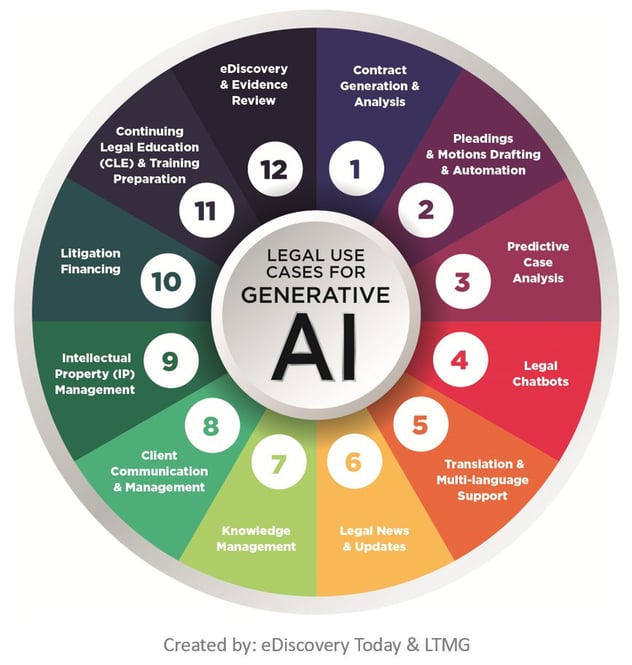 Figure 1: Infographic about legal use cases for GenAI (Source:
eDiscovery)
Figure 1: Infographic about legal use cases for GenAI (Source:
eDiscovery)
Unlike traditional legal software that organizes and retrieves information based on pre-defined rules, generative AI can create new content, recognize patterns, and make predictions based on massive amounts of training data. This fundamental difference allows these systems to draft documents, answer complex questions, and provide insights that were previously only available to lawyers.
The technology behind today’s legal AI solutions consists of several interconnected parts:
- Large language models (LLMs) like GPT-4, Claude, and Llama are the base, trained on billions of text examples to understand and generate documents and images. These models can understand legal terminology, recognize contract structures, and generate contextually relevant text.
- Natural language processing (NLP) allows the system to understand the semantics and context of legal language, including the subtle meanings of wording in legal documents.
- Specialized machine learning (ML) algorithms continuously improve with exposure to legal documents and feedback from real-life lawyers.
GenAI does have some limitations when it comes to law:
- Current systems lack the contextual judgment and ethical reasoning that experienced lawyers bring to complex legal matters.
- They can’t replace the nuanced understanding of business relationships, industry norms, and strategic considerations.
- Any GenAI tool will only be as good as their training data. Not properly supervised, they can perpetuate biases or outdated legal approaches.
Core Applications of Generative AI in Contract Management
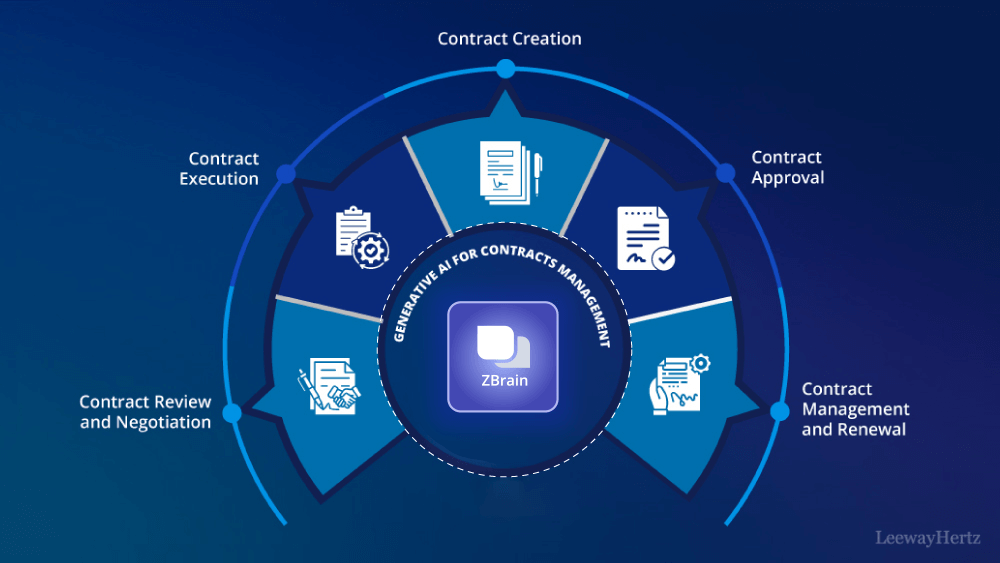 Figure 2: Infographic on generative AI for contract management (Source:
LeewayHertz)
Figure 2: Infographic on generative AI for contract management (Source:
LeewayHertz)
Generative AI is transforming contract management across four primary domains, each addressing critical pain points in the contract lifecycle.
1. Automated Contract Review and Analysis
AI reviews contracts in a snap. It finds key provisions, risks, and non-standard clauses humans might miss, especially useful for due diligence or high-volume reviews.
2. Contract Summarization and Knowledge Extraction
GenAI produces summaries of obligations, rights, deadlines, and contingencies, making sure to route the right info to the right teams. It can then extract data like parties, dates, renewal terms, and termination conditions into contract databases.
3. Contract Drafting Assistance
An AI tool drafts first versions of standard agreements, suggests clauses from approved language libraries, and tailors wording to business needs. This is especially useful for NDAs, service contracts, and employment agreements.
4. Contract Negotiation Support
AI analyzes proposed changes, compares them to preferred positions, suggests responses, tracks negotiation history, and highlights common points of contention. And it does all this while integrating with existing contract workflows.
All of the above result in measurable reductions in time spent on contract delivery, but that’s just the start of how GenAI can enhance a legal practice.
Benefits of AI-Powered Contract Automation
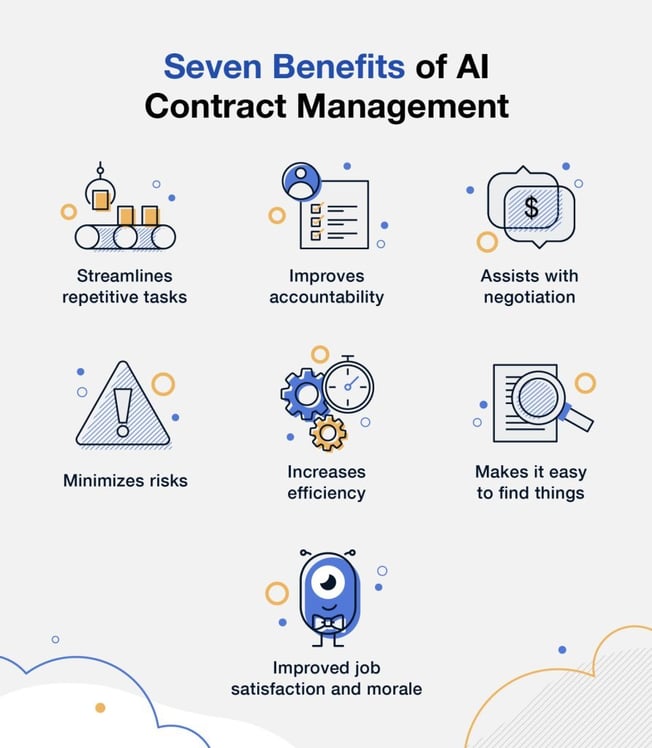 Figure 3: Infographic on the benefits of AI contract management (Source:
Contract Safe)
Figure 3: Infographic on the benefits of AI contract management (Source:
Contract Safe)
The benefits of generative AI in contract management go far beyond mere time savings.
Measurable Efficiency Gains
Organizations using GenAI tools significantly cut review time. But the real gain is that law firms can then handle more contracts without a proportional increase in headcount.
Accuracy and Consistency
Unlike reviewers who might miss important provisions when tired or rushed, AI systems perform consistently regardless of document volume or complexity. They apply the same level of scrutiny to the last page of a 100-page contract as they do to the first.
This leads to fewer:
- Overlooked obligations
- Missed renewal dates
- Contract compliance issues
More importantly, these systems ensure your organization’s contract standards are applied across departments and geographies.
Risk Management
Generative AI changes how organizations approach contractual risk by:
- Proactively identifying compliance issues, conflicting provisions, and unfavorable terms
- Flagging concerns during review or drafting—before agreements are signed
- Simulating scenarios to see how contract provisions would play out under different business conditions
- Enabling more informed risk acceptance
Strategic Advantages
Freed from document review, attorneys have time to focus on:
- Complex negotiations
- Relationship management and new clients
- Strategic planning
This is a key point: Legal teams that are involved earlier in strategic business discussions—instead of simply drafting and performing basic reviews of agreed-upon terms—will help companies perform better in the long run.
Also, AI analysis yields data that gives you a whole new level of visibility into contract portfolios, allowing you to see patterns across thousands of contracts and help you plan future moves. However, when it comes to making the most of generative AI, it all comes down to effective implementation.
Real-World Implementation Considerations
While generative AI offers powerful advantages for contract management, success depends on thoughtful planning and execution.
Picking the Right AI Solution for the Job
Start by nailing down what you actually need, whether it’s help with reviews, drafting, or managing contracts.
Focus on tools that hit those pain points, checking for accuracy, easy integration, and flexibility. Then decide: Do you want a general-purpose AI or one built specifically for legal work?
Safeguarding Your Sensitive Contracts
Contracts are packed with confidential info, so make sure your AI provider takes security seriously.
Look into how they handle training data, use your documents, and protect information through encryption, access controls, and GDPR compliance. Cloud platforms add flexibility, but don’t forget to loop in your IT and security teams to cover every angle.
Getting People to Use It
When looking to introduce GenAI, the biggest barrier is usually people, not tech. Start small with a pilot, and make sure training covers what the AI can do and where it falls short. In other words, have clear rules in place for when humans need to step in.
Also, make sure to track results to see if the AI is actually delivering, as poor results will erase any gains in terms of time saved.
Case Studies: GenAI for Law Firms in Action
Real-world implementations demonstrate how generative AI is transforming legal operations across various contexts.
Intelligent Document Processing for Case Opening
A RapidScale client revolutionized their intake processes by implementing AI-powered extraction of structured data from standardized documents.
Problem: Manual data entry taking 30-60+ minutes per case.
Solution: AI to automatically identify and extract TAD numbers, dates, party information, and narrative summaries.
Results:
- Dramatically reduced processing time.
- Improved data consistency across systems.
- Accelerated case setup, allowing attorneys to begin substantive work sooner.
Firm-Wide Intelligent Search
The same firm transformed its knowledge management with unified search capabilities.
Problem: Information siloed across multiple systems (ISA CRM, Salesforce/Litify, document repositories).
Solution: A unified search interface using natural language processing.
Results:
- Empowered attorneys to find case information, communications history, and relevant precedents in seconds.
- Delivered a “30,000-foot view” for enhanced strategic decision-making.
- Enabled partners to identify patterns across similar cases and leverage institutional knowledge.
Automated Document Generation & Bulk Merging
The firm eliminated substantial manual work for its legal operations team.
Problem: Time-consuming manual creation of routine documents.
Solution: A system that pulls data directly from case management to generate letters of representation, other situational documents, and support for creating multiple documents simultaneously.
Results:
- Virtually eliminated errors in client communications.
- Freed staff for higher-value activities.
- Found to be particularly valuable for mass tort litigation requiring similar documents with slight variations.
Conclusion: AI for Law Firms and Legal Tech
For law firms, generative AI marks a major milestone in the evolution of legal practice, especially in contract management and legal operations, offering the power to analyze, draft, and manage contracts with a speed and precision once unimaginable.
For legal teams facing mounting workloads, compliance demands, and cost pressures, GenAI not only frees them from basic tasks but is a path to true digital transformation.
But to unlock AI’s full potential in law, you need a partner you can trust. With secure cloud platforms, 24/7/365 data protection, and deep AI/ML expertise, RapidScale enables legal teams to innovate with confidence.
By leveraging RapidScale’s AI/ML services, legal professionals can enhance contract analytics, automate document review, and access critical applications securely from anywhere, freeing them up to focus on strategy, negotiations, and advocacy—areas where human expertise matters most.
Ready to bring your legal operations into the digital age? Partner with RapidScale to see how secure, intelligent AI can transform your practice.