
Keep the momentum going. Explore more insights to move your business forward.
In the fast-paced world of financial services, where real-time processing, data security, and regulatory compliance are paramount, managing AWS costs effectively can be a huge differentiator from the competition. Financial institutions often grapple with complex and dynamic workloads, which can lead to significant cloud expenses if not properly controlled. AWS offers powerful solutions to support these needs, but without strategic cost management, the financial benefits can quickly erode. This blog post guides you through effective strategies to optimize AWS costs without compromising performance or scalability.
“80% of organizations that performed a lift and shift migration of internal applications from their data center to the public cloud fail to achieve meaningful cost savings.” - Gartner
The big picture here is that the public cloud is not like a traditional data center. With 200+ AWS services, all with diverse configuration options, it's critical you understand the available pricing mechanisms and how they affect your monthly bill.
AWS Cost Optimization for the Financial Services Industry
Most cost optimization techniques are industry-agnostic since AWS infrastructure is designed to run practically any application. This blog will outline optimization strategies applicable to most industries, but here are a few specific to financial services organizations:
- Data Storage Optimization – Compliance regulations such as PCI, SOC 2, and GDPR require organizations to store large amounts of data for extended periods. Using the optimized AWS data service AND optimized data class will ensure you aren’t overpaying while still satisfying compliance requirements. Further information on data storage optimization can be found later in the blog.
- Security Tooling Optimization – These same regulations often lead organizations to implement robust security and monitoring systems. By efficiently integrating AWS native security services such as GuardDuty, SecurityHub, Inspector, and Audit Manager, you can reduce the complexity and cost of security operations, ensuring continuous compliance and threat detection while minimizing the need for costly third-party solutions.
- Audit Preparedness – Time equals money, so come audit time, it’s crucial organizations can quickly complete them and get back to revenue generating work. Preparing for audits often involves maintaining comprehensive logging, encryption, and data retention policies, all of which can be time-consuming. By automating the collection of this audit data using services such as AWS CloudTrail and Backups, you can effortlessly pass audits.
The remaining cost optimization techniques in this blog are applicable to all industries, but they are just as necessary for financial services organizations looking to stay competitive and profitable.
Visibility
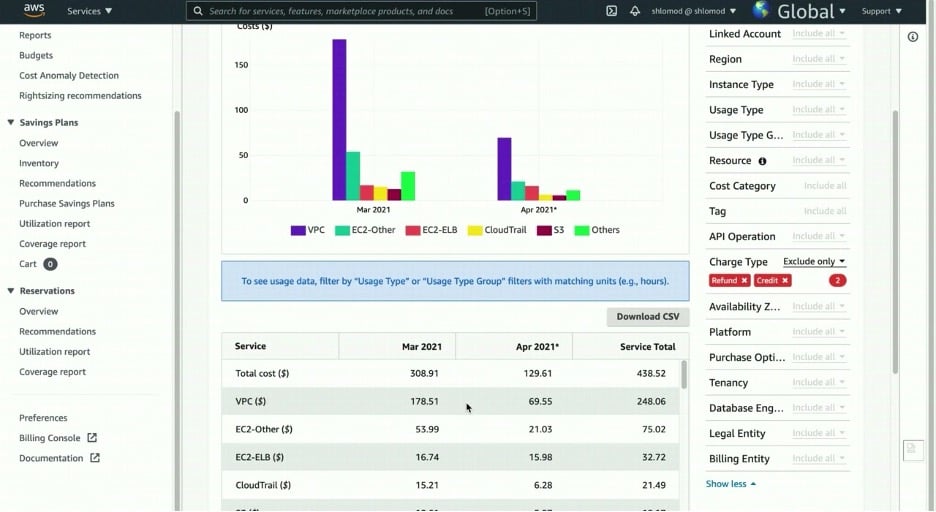
Gaining granular visibility into your cloud spend is a crucial first step of a successful cost optimization strategy. AWS provides services like Cost Explorer to visualize cloud costs via graphs and charts, as well as flag potential cost anomalies. Once you fully understand where your money is going, you can move on to governance and optimizations.
Governance
Governance is all about preventing unnecessary costs. If implemented correctly, fewer regular optimizations will be needed. Conversely, a lack of governance can lead to cloud sprawl and excess costs.
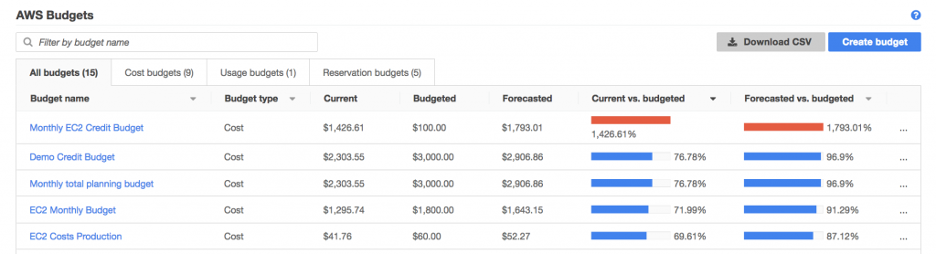
Governance is divided into notifications and controls. Notifications alert you to cost spikes whereas controls deny the cost spikes in the first place.
- Notifications: With AWS Budgets, you can set up cost or usage-based thresholds that trigger alerts when reached.
- Controls: AWS Identity and Access Management (IAM) and Service Control Policies (SCPs) are two helpful AWS services that can limit the available actions that users can make in AWS.
Optimizations
Now on to the fun part! What are the different levers you should look at pulling to reduce AWS costs? Before I jump in, it’s important to know the order of operations when starting to optimize.
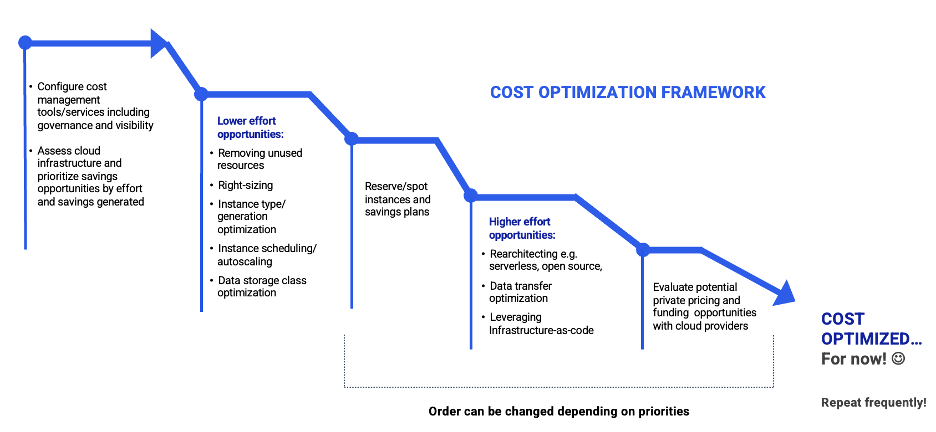
The biggest takeaway here is that you need to complete all the lower-effort cleanup tasks (column 2) before moving on to things like RIs/Savings Plans and rearchitecting (columns 3 and 4)
Right-sizing
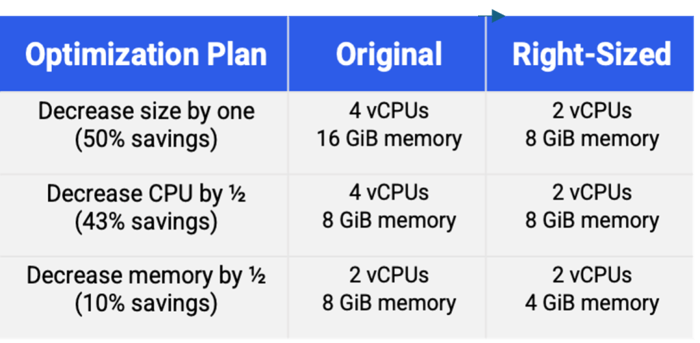
If you have accurate utilization data from CloudWatch, right-sizing becomes a straightforward task. There are two main types of right-sizing: adjusting the size of an instance within the same type, or changing the instance type to achieve preferable vCPU/memory ratios."
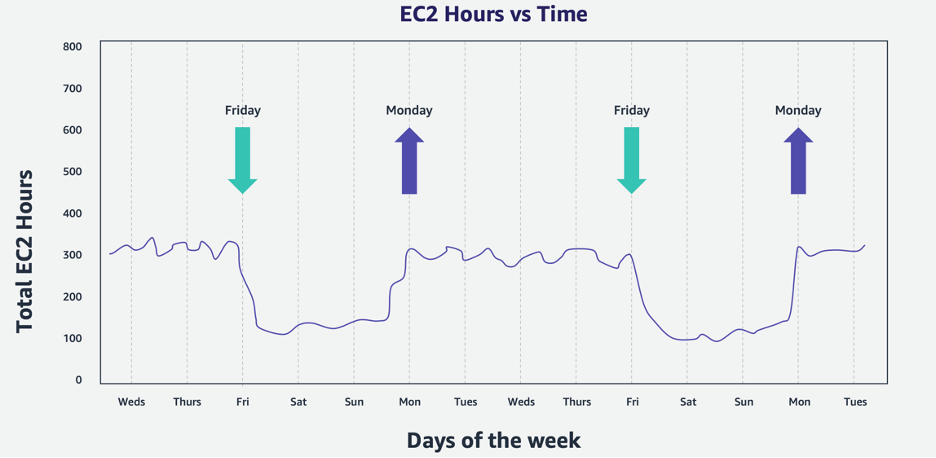
Instance Scheduling
Turning off resources that aren’t being used is an easy way to manage costs. For example, spinning down development resources at night or during the weekends ensures you are only paying for resources when you use them.
Reserved Instances and Savings Plans
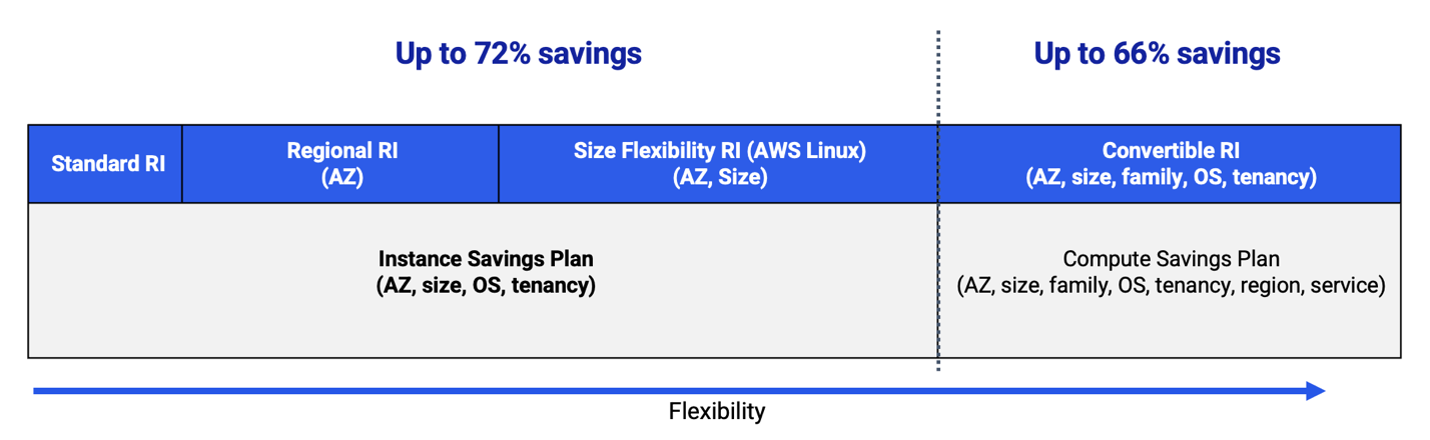
For resources that will be running constantly (think production workloads), Reserved Instances (RIs) and Savings Plans (SPs) can be one of the most impactful optimization methods. RIs are available for EC2, RDS, Redshift, Elasticache, OpenSearch, and DynamoDB. SPs are generally more flexible than RIs, and available for EC2, SageMaker, and Compute (EC2, Lambda, or Fargate). For most organizations, the Savings Plan offerings will yield the best combination of savings and flexibility; however it’s important to thoroughly evaluate the different options before committing to RIs or SPs.
Customer Success Story - Numerix’s TransformationNumerix, a leading provider of risk management software, partnered with RapidScale for their AWS migration to offer their flagship product, Numerix Oneview, as a cloud-based SaaS solution. By building a secure, and cost-efficient AWS environment, RapidScale enabled Numerix to focus on innovation while we managed their cloud infrastructure. This partnership demonstrates how RapidScale empowers financial institutions to transform their operations and drive growth. |
Data Storage
S3 is generally the most cost-effective way to store data. Prioritize using S3 for your workloads when possible.
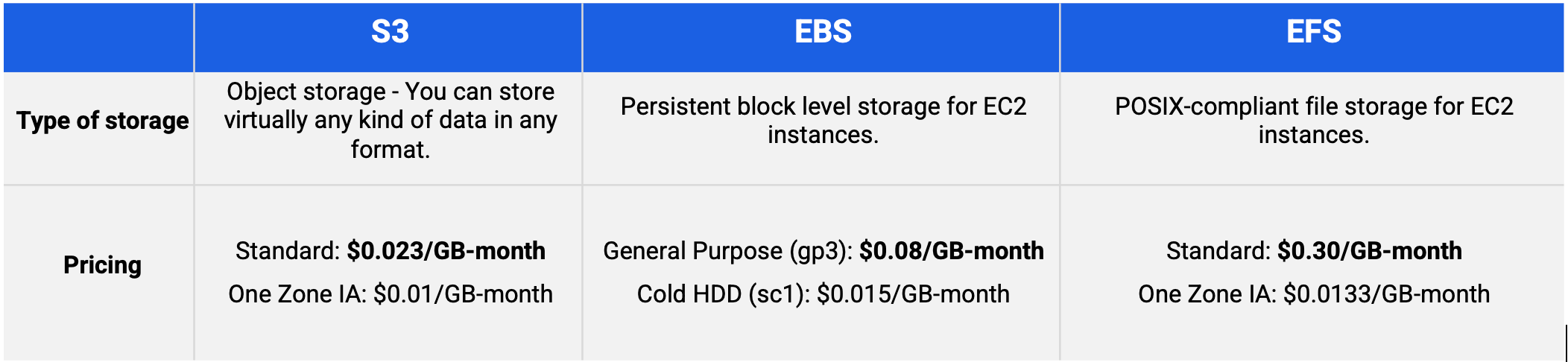
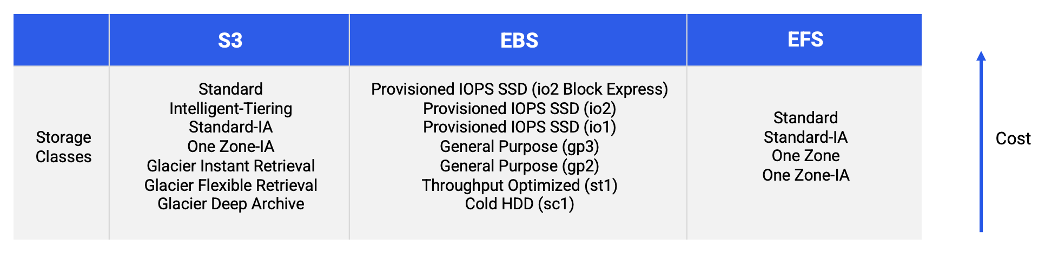
Within each AWS storage service, there are multiple tiers or classes of storage. Always choose the lowest cost storage class that satisfies your business requirements.
Data Transfer
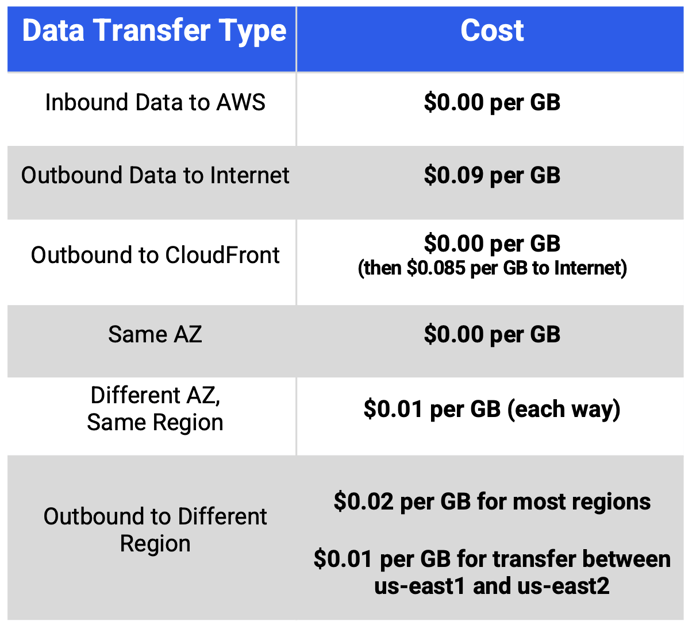
When architecting in AWS, it’s important to understand the associated costs with using multiple regions and availability zones. The added resilience of HA and DR architectures are critical for certain workloads, but for others, it’s more cost-effective to run everything in the same AZ.
Rearchitecting
If you’ve found yourself running out of cost reduction levers to pull in AWS, it might be time to consider rearchitecting. Adopting more cloud-native architectures and open-source platforms can save on both infrastructure usage costs as well as internal operational costs. Competition in the Financial Services sector is fierce, and if you’re not taking advantage of the scalable, resilient, and managed services benefits of AWS, you’ll see it on your bottom line. Modern architectures typically leverage AWS managed services such as Amazon Aurora or RDS for powerful, open-source databases and ECS, EKS, Fargate, or Lambda for serverless or containerized applications.
AWS cost optimization is an ongoing process that requires a proactive approach and a deep understanding of your infrastructure and usage patterns. By implementing the strategies outlined in this blog, financial services organizations can effectively manage and optimize their cloud costs while maintaining the necessary performance, security, and compliance requirements.
Ready to transform your financial services operations? Contact RapidScale today to explore how our tailored solutions can meet your unique needs.
Sources:
All examples based on current AWS us-east1 pricing
https://jason-6.medium.com/aws-ri-vs-savings-plan-10bb683896d9