
Keep the momentum going. Explore more insights to move your business forward.
The Rural Health Transformation Program (RHTP) is more than a funding opportunity—it’s a once‑in‑a‑generation catalyst for reinventing how care is delivered across rural America.
During a recent webinar hosted by RapidScale and Elite Program Specialists, industry experts Miles Tanner and Crystal Matthews unpacked what RHTP really means, who can benefit, and how providers can secure the funding needed to modernize, strengthen, and future‑proof their organizations.
If you missed the session, here’s your full breakdown.
Why the RHTP Matters
The Rural Health Transformation Program unlocks $50 billion in federal investment to modernize and stabilize rural healthcare. The program is designed to tear down long‑standing financial and technical barriers so providers can:
- Modernize aging infrastructure
- Improve care outcomes
- Strengthen cyber resiliency
- Expand interoperability
- Leverage new AI‑driven capabilities
The funds flow from Centers for Medicare & Medicaid Services (CMS) to states to healthcare providers, nonprofits, community orgs, and vendors. In short: if your work touches rural health—even indirectly—you’re likely eligible.
And yes, interest is sky‑high. But the window to submit a proposal? Extremely tight.
Who Can Apply? More Organizations Than You Think
One of the surprises about RHTP is its breadth. Although rooted in rural health, funding is not limited to rural entities. Depending on state guidance, eligible applicants may include:
- Critical Access Hospitals
- Rural and urban hospitals
- FQHCs and lookalikes
- Behavioral health organizations
- Community nonprofits
- Large health systems supporting rural communities
- Regional collaborations and consortiums
- States have wide discretion in defining eligibility, so the opportunities are far‑reaching.
What Kinds of Projects RHTP Covers
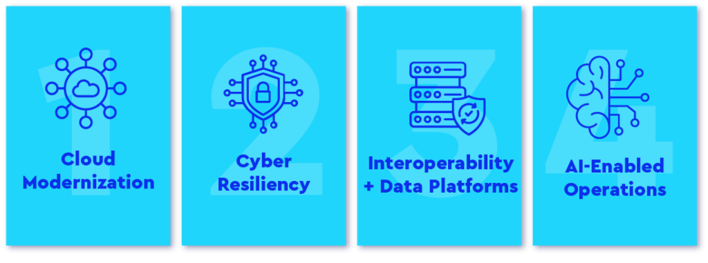 4 types of projects covered by RHTP
Crystal and Miles broke the guidance down into four major pillars:
1. Cloud Modernization
Modern infrastructure is the gateway to everything: scalability, innovation, reliability, and readiness for future technology.
Think: application modernization, cloud migration, infrastructure overhauls, and aging‑hardware replacement.
2. Cyber Resiliency
Healthcare remains one of the most targeted industries for cyberattacks—but rural facilities often lack the safeguards needed to respond and recover.
RHTP supports initiatives that protect patient data and keep systems online.
3. Interoperability + Data Platforms
Rural patients routinely move between local hospitals, regional specialty centers, and larger health systems.
RHTP funds solutions that ensure their data moves with them—seamlessly, securely, and automatically.
4. AI‑Enabled Operations
Done right, AI can amplify clinician capacity, streamline workflows, personalize care plans, and improve outcomes—especially valuable in resource‑constrained rural settings.
A key mindset shift: RHTP focuses on allowable uses, not strictly “eligible expenses.” If an expense helps you achieve your project’s stated objectives—and aligns with state priorities—it may be permissible.
This is refreshingly flexible for a federal program.
The Hidden Challenge: State‑by‑State Uncertainty
If you’re feeling confused, you’re in good company—so are the states.
Despite initial expectations for funds to be available as early as January 2026, it’s now looking more like late 2026 as CMS still needs to review state strategies, budgets, and compliance alignment.
Every state’s rollout plan is different:
- Some will run competitive award cycles.
- Some will launch vendor contracts.
- Some will embed dollars in existing programs.
- Some will cap certain initiatives.
- All will require measurable progress by 2028.
One thing every state has in common? The proposal window will be extremely short. You can’t afford to wait to start planning.
What Makes a Proposal Truly Competitive
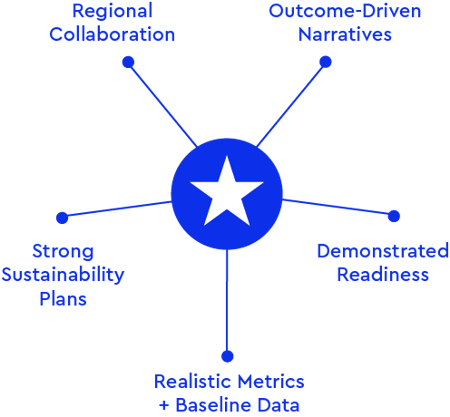 What makes an RHTP proposal truly competitive?
Crystal outlined five key attributes of winning submissions—each one critical:
- Regional Collaboration: The more people your project impacts, the farther state dollars go—and the more competitive you become.
- Outcome‑Driven Narratives: Don’t tell a story about technology. Tell a story about results, impact, and measurable change.
- Demonstrated Readiness: States need confidence you can deliver. Pre‑planning, partnerships, governance models, and draft scopes all help prove it.
- Realistic Metrics + Baseline Data: Dream big—but anchor everything in measurable, achievable progress.
- Strong Sustainability Plans: States want programs that thrive long after RHTP funds are gone.
Avoiding Duplication (A Big Federal Priority)
One of the most overlooked—but vital—requirements: RHTP funds cannot duplicate services or replace other funding sources.
You’ll need a clearly documented funding braid map:
- What funds you currently receive
- How each funding source is allocated
- Why RHTP dollars are needed
- How this project is distinct and non‑duplicative
- Transparency here builds trust—and competitiveness.
Your Readiness Checklist
If you want to move fast when funding drops, the work starts before the Notices of Funding Opportunity (NOFOs) do. These foundational pieces will make or break your speed, clarity, and competitiveness.
- Prioritize your technology/security/data initiatives.
- Draft project scopes, work plans, and timelines.
- Compile baseline data and identify metrics.
- Define governance and collaboration structures.
- Gather letters of commitment or support.
- Validate procurement, accounting, and compliance processes.
- Line up partners you’ll need for execution.
Even if NOFOs aren’t out yet, these pieces can be prepared—and will save you when time is tight.
Where RapidScale + Elite Program Specialists Fit In
Together, RapidScale and Elite bridge the two worlds that most providers struggle to unite:
Elite Program Specialists:
- Grant writing
- Competitive bidding strategy
- Compliance guidance
- Proposal development
- Funding structure and narrative alignment
RapidScale:
- Technical scoping
- Architecture design
- Modernization roadmapping
- AI, cloud, security, and interoperability expertise
- Compliance‑aligned solutions
- Long‑term managed services
Think of Elite as the proposal experts and RapidScale as the technology execution engine—partners who can help you prepare with confidence and compete with strength.
Position Your Organization to Win RHTP Funding
The Rural Health Transformation Program represents a bold, historic investment in the communities that need it most. But opportunity doesn’t equal access.
Preparation is the difference between receiving funding—and watching it go to someone else.
If your organization touches rural health, now is the time to:
- Strategize
- Prioritize
- Collaborate
- Architect
- And act
RapidScale and Elite Program Specialists are ready to help you navigate every step—from scoping to compliance to execution.
For deeper insights into how to make the most of RHTP funding, see the below resources:
- RHTP Quick Guide: How to Build a Competitive Proposal
- Webinar Replay: How to Compete for Your Share of RHTP Funding
And if you’re ready now to make sure your healthcare organization makes the most of RHTP funding, don’t wait. Let’s make sure you’re prepared to receive as much funding as possible. Send our team a message today to get started.